Saturday, May 13, 2006

Blueprints For A Homemade Iceshanty

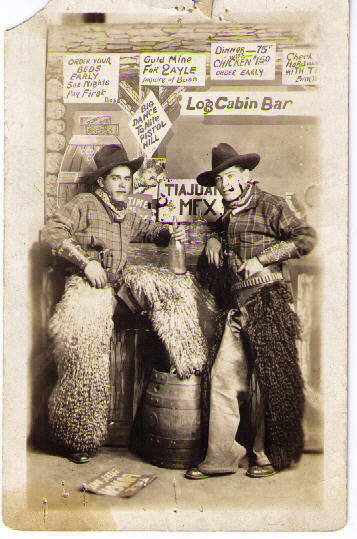
In a tavern in Tijuana, 1941 Chronicle of a moment

Sunday, April 2, 2006

Single Persons Withholding Should Be


On 19 August last year, a time when almost no one writes letters, Salvador Elizondo sent me a handwritten:

Dear Friend
First of all I want to thank and congratulate you on your splendid article in the Journal of the University on Moleskine notebooks .
Then I want to apologize for this old system of communication I have to communicate with you, but this is all I have or I have left. I used when I lived in Paris, Moleskine notebooks and there must be some among my memories of that time. I do not know about where you were, only that since I have not had missed. My current condition forces me to use things that were whims and follies of my youth, gloves, cane, hat, but one thing I've always needed were the books. Please, where to buy them here in town?
I thank you and wish you health. Your friend


Salvador Elizondo


Inclasificable as narrator, very strange to the prototype of the writer Latin American have in Europe, Salvador Elizondo in an instant ceased to be among us, his readers, his wife, his children, his friends, his brothers, his students, his comrades on Wednesday 29 March. 73 years completed a full and exemplary life for generations of writers: his country showed what the commitment to art, talent, elegance and dignity of a true intellectual. Besides art
narrative admirable and originally ran in novels like Farabeuf or chronic a moment, The secret hypogeous , The grafógrafo , Salvador Elizondo served as Octavio Paz called "the thesis without evidence", ie the literary essay is sometimes dealt with the painting (he studied architecture, he wanted to be a painter and filmmaker) and later of photography and literature. Photo


In some catalogs of photographs ever saw the hand of Salvador Elizondo to meditate, for example, pictures of Paulina Lavista. In his book, Contexts, fortunately for us, Elizondo rescued one of his most memorable, "Nicephore Niepce," in which strings of words with surgical precision, not only records the scientists who traveled avatars chemical research to fix images since the late eighteenth century. It also reflects on the photo that has pigmented impregnating the everyday nature of our lives. It is curious
Salvador Elizondo to the production of Niepce and Daguerre, the inventor of photography: the magnitude of his achievement is only comparable to that of Gutenberg.
Niépce "opposed a temporary dam to channel Heraclitean that somehow allows us to bathe twice in the same river."
Without photography, Elizondo argues, would be impossible two notions that underpin the life and politics: information and communication.
"Two of the highest offices of state archiving and propaganda, would be impossible without the discovery of this medium of expression less perfect but more likely that the descriptive writing. "
In a tone of In Search of Lost Time, Marcel Proust's novel, the author of Camera Lucida and Elsinore feels that "our personal pantheons have the form of a photo album and photograph not only permeates our memory and our history in we are located but also the mirror-like Mephistopheles, is capable of showing instant figure, if not the actual presence, in a fleeting and elusive, ideal. " Literature


A Mexican writers who Elizondo was literally better deciphered Juan Rulfo. I knew him since 1953, when both agreed as coordinators of the literary workshop of the Mexican Center of Writers, which had with the author of Pedro Páramo a friendly debate. Elizondo Rulfo claimed that invented the language and Rulfo replied that no, that language that structures his narrative is not one and neither could only be the language spoken daily in the villages of southern Jalisco (San Gabriel, Apulco, Sayula , San Pedro Toxin, Tuxcacuesco).
"His modesty is too great an artist couple, it is impossible that the people speak naturally to a literary pitch so marked that it is not noticed. I have been in Jalisco " Salvador Elizondo said, "and I've never heard anyone like Rulfo's stories. What happens is that he is the essence of this language and can be moved to the writing, which is the most difficult problem that exists for a writer. Transcribe speech written literary language and preserve their status talks. " Painting


When I was 18, the painter Arnaldo Coen met Salvador Elizondo.
- What you do you do? Asked the writer.
-A painting, "said Arnaldo.
- You know who was Paolo Uccello?
"I saw your stuff in books. I know that he painted in Florence in early fifteenth century, during the Renaissance, but nothing more.
"Well, when I saw The Battle of San Romano in the National Gallery hung up his brushes. I never painted. Thereafter
Arnaldo Coen picked up the brush left hanging
Salvador Elizondo.

How Does Daktarin Work

Jacarandas in Condesa

As the bomber in his own blood
city steeped in lies my
of jacaranda flowers.

-Tita Valencia, The clus
trovar of jacarandas


dawn the streets carpeted in purple, flower-coated cars and during carnival, very sparse and trees, some still loaded with soft purple to continue the relay, because some are deflower first and others later, and reach the end of the week higher. Because or the jacaranda tree is Lent. Dura as a sigh, some forty days between Palm Sunday and the Resurrection of the last flowers are associated with the purple of passion in the Catholic liturgy.
After jacaranda are not completely naked, and in winter, but do not stain the neighborhoods of Condesa West and succeed in the sun valley Cuauhnáhuac as when one goes in between the predominantly purple foliage of Tepoztlan. On this side of the Condesa highlights dominion, the shadow Impressionist Cézanne, and plant these flowers Party then we spread on sidewalks and they are much more beautiful than those of East Condesa or Guadalajara or Colonia del Valle.
is our brief summer, from March to May in the capital, while in Mexicali and Hermosillo the oven up to 46 degrees and no air conditioning go out there until October. We did not reach the dog days of August, but goes dormant in the evenings between Mexican Eduardo carpentry, the Epifanio newsstand Valencia (better known as the Pifas), the shoe of Santiago Ramirez Muñoz master tailoring, hairdressing High Life of Don Miguel Cote, together with canteen closed doors and the Café de la Selva, a short walk from Gloria's Ernesto Chiandoni Saidi and coffee (serving the grandchildren of the colony Chiandoni Naples). Other trades are surprised devastated by the restaurants, the vulcanizing, electrician, baker. Survive the trunk, the locksmith, the watchmaker, blacksmith, plumbing, the bookseller, the lord of garbage, from the cleaners, but they have their days numbered.
Fortunately, for now, there is the Countess and Vips and Sanborn. Don Eduardo
Mexican (and read the name on the birth certificate of his great grandfather) is 93 years old and is Comonfort, Guanajuato. Arrives every day in pesero, with his staff inseparable, and remembers when he built a dining room and some booksellers to Amalia and General Lazaro Cardenas in Palmira, Morelos. "You do not go," the President told the carpenter and his assistant. "They get to eat."
"Do not let them tell you the Pifas. Don Epifanio tell you, "I say. People here are very close.
already has twenty-five years with his post at the corner of Michoacán and Cuernavaca, and often works with his wife and children Grisel Rosario, Jasmin and Edgar. And it is a being of light, says Carmen Gaitan. The most loving and supportive neighbors. A world all help. He employs an old man. Car wash. Da ball. You pay for coffee. You get to a laundress, a reliable taxi, a locksmith, an electrician, sells used books and magazines like The New Yorker Magazine littéraire and your library's Bench. It is an employer of service to others and, as few Mexicans have a word. Honor and pity.
In short, this plant bignoniácea, Jacaranda brasiliana or sagraena of beautiful foliage and large leaves divided into very small flakes and blue flowers in clusters, are short-lived. No longer in this world and the dead youth. In the week more before the Saints were covered with colored flannel jacaranda.
But its petals are not garbage. Thunder and stain the floor when you step. Creak. Are strong odor and smell it all day, are you up to the skull. If it rains the smell of asphalt flows very nice, as hueledenoche. Its roots spread horizontally to the surface, burst cement and broken gas pipes. Tiran leaves, violet, blue-purple, nearly purple, which means hope among Catholics. Its leaves bear flowers and seeds. Is constantly changing as snakes shed their skin, says Federico Ramirez, the catering chef chef Don José (in Atlixco and Montes de Oca), with experience in Greece and other Mediterranean cuisines.
And they also like the wine-dark sea, referred to in Homer's Odyssey: the color violet between the islands and Caribis Escilla in the Sicilian coast, the sea comes to certain hours of the morning.
Monday, February 27, 2006

Dry Mouth Sleeping Solutions

E GOTEC

Federico Campbell was born in Tijuana, Baja California, on July 1, 1941.
studied law and philosophy at the Universidad Nacional Autonoma de Mexico and journalism (1966-67) in Saint Paul, Minnesota.
In 1969 he was Washington correspondent of the Mexican News Agency.
Between 1977 and 1988 he worked as a reporter for the weekly Proceso.
His novel The Morse code was published by Alfaguara.
His anthology of critical essays on Juan Rulfo, the fiction of memory, appeared in 2003 under the seal of Editorial Era.
In 2000 he won the Prize for Fiction Colima, awarded by the INBA and the University of Colima, for his novel Transpeninsular.
In 1977 he founded the publishing Typewriter.
In 1994 participated in the National System of Creators and in 1995 won the JS Guggenheim Fellowship.
theater has translated Harold Pinter, David Mamet and Leonardo Sciascia. Write in the journal
Goals and in newspapers in northwestern Mexico a weekly column, more literary than political: The Hour of the Wolf.


Work published
Novel: Everything
seals, Ed Joaquin Mortiz, 1983, in Tijuanenses volume.
pretext or the masked writer. Fund de Cultura Economica, 1979.
Transpeninsular. Joaquín Mortiz, 2000.
The Morse key. Alfaguara, 2001.

Story:
Tijuanenses. Alfaguara, 1997. Tijuana. Stories on the border. The University of California Press, Berkeley. Translation Debra Castillo. Contains All the seals and five stories, including "The Brothers."

Anthology:
Empire goodbye. Aldus and CNCA, 2002. Anthology of prose (short stories and novels).
The fiction of memory. Juan Rulfo to criticism. Era, 2003.

Essay: Sciascia
memory. Fondo de Cultura Economica, 1989. Postscript
sad. Tightrope Editions, 1994.
The invention of power. Aguilar, 1994.
black mask. Joaquín Mortiz, 1995.
Conversations with writers. Conaculta, 2004.

Interview:
The typewriter [interviews with FC] by Hernán Becerra Pino. Editions of the National Council for Culture and the Arts, Cecut, Tijuana, 1997.

* * * Key Morse


The son tells the story of his father, an old telegraph. Thirty years after the death of parents, three children are made about them and discover that each had a different perception of everyone. More than the story of an office in extinction, the telegraph, the Morse code sets the stage memory to reconstruct or invent from the relentless trial of children. The same experiences, never commented because they lived together, are just around the years, different for everyone: the invention of the father in each of the subsidiaries fantasies.


Transpeninsular
The theme is the search for the missing writer. It is a journey through the Baja California peninsula and on the last love of the narrator character, he is giving an overlap of geography, the peninsula of Baja California and Italy. Fernando is the story of Jordan, an anthropologist and journalist who in the 50 "discovers" the cave paintings of Baja California and died in 1956 in La Paz, at age 36, apparently by suicide, or murdered.


All seals
is a novel that happens in Tijuana teenage narrator's character, a memory Tijuana, to the 50. Beckett and the tone is melancholy. Much of the scenes take place in a rarefied atmosphere, delusional, schizoid. The boy falls in love with an American woman who arrives at the airport in Tijuana in a yellow plane, and finally concentrated all women in the narrator's life: mother, sisters, first girlfriend, the woman. Ones without a precise definition, intermediate, middle, amphibians and air, the protagonists assume time dilation and the purgatory of the borderline personality.
This novel was translated into English in Tijuana volume. Stories on the Border, by The University of California Press, Berkeley. Translation Debra Castillo.


pretext or the masked writer
is the story of a journalist, Bruno Medina, who was a government office charged with the false biography, a pamphlet by Professor Alvaro Ocaranza, to been disrupted. The novel reflects the atmosphere of political persecution that occurred in Mexico and other Latin American countries in the late 60's. The tragedy is exacerbated when the ghost writer, author of anónino, feel your Ocaranza relationship with the teacher is transformed into an identification that breaks your whole being and lives as a betrayal of the father. There is also the issue of relations between the press and power. All
hoax Bruno becomes a problem for identities, Pirandellian a betrayal of the symbolic father and a teacher's shame, a way of life and literary self-destruction, an inability to live life with courage, enthusiasm, passion and risk. Sexuality, sexual isolation, is mad, pointless and masturbatory mired in anguish. To his great misfortune, takes shape in his mind the possibility that paranoid in the end is investigated by means of a linguistic approach of estiloestadística. Meet the terror when he discovers that this method (literary police) in effect there will be annihilation and moral, mental, irreversible, by highlighting the project that had never suspected: the libel of his own life.


Sciascia memory is readable and introductory analysis of all the works of the Sicilian writer Leonardo Sciascia. This is a reflection on the mafia, the Sicilian, the English world, and things we have in common English, Mexican and Sicilian: the Holy Office of the Inquisition, for example. Also concerns the "sicilianización the world," Sicily as a metaphor for today's world and the disappearance of the state. It also contains a chronicle of Sicily tour and an interview with Sciascia.
For Claude Ambroise, the largest specialist Sciascia, "the best presentation of the work of Sciascia is a English-language book written by a Mexican (Federico Campbell, Sciascia memory) that, without being pedantic, but with precision and passion, outlines the research content sciasciana. Campbell's membership in the Hispanic world of greater thickness allows you to give the English side of the Sicilian writer: the critic reactive Mexican-Borges Sciascia dialogue and insert and update them in a Latin American context, reflections on the Inquisition and injustice. " (Leonardo Sciascia. Opere 1984-1989. A cure di Claude Ambroise. Classici Bompiani, Milano, 1991.)


Black Mask (crime and power)
The suspicion that the crime novel has not only the issue of justice and political legitimacy, but also a universe in which power is fused with the crime, led the author to weave a meditation on the police power and the absence of the state. Essays on detective novels and true crime.


Sad Postscript is a literary journal that takes as its model the Journal de Jules Renard or Brancati Vitaliano Roman Journal: a diary in public. Its theme is the impotence of literary why an accomplished writer stops writing and choose to keep quiet? There is a melancholy following the act of finishing a work, as suggested by the subtitle of the book: Post coitum omne animal triste.


The invention of power can be understood the invention of power in the sense that it says "the invention of the umbrella, but also and above all, as the capacity of power has prefabrication and inventive. That is, the power as a producer of reality and fiction: iron hands and paper tigers over a circularity not less theoretical than practical, for the power but also invented invented.


The typewriter
The volume, by Hernan Becerra Pino, anthology twenty-three of the best interviews throughout his literary work have made him the writer Tijuana. Among the interviewed literary obsessions include aviation, flying experience, the transience of journalism, literary impotence, the ambiguities of memory, the ghost of the father, the passion for Italy and Baja California, the crime of power and "Tijuana written by hand."


The fictional mind: Juan Rulfo to criticism
Selection and foreword by Federico Campbell. Anthology of fifty years of criticism of the literary work Juan Rulfo.